

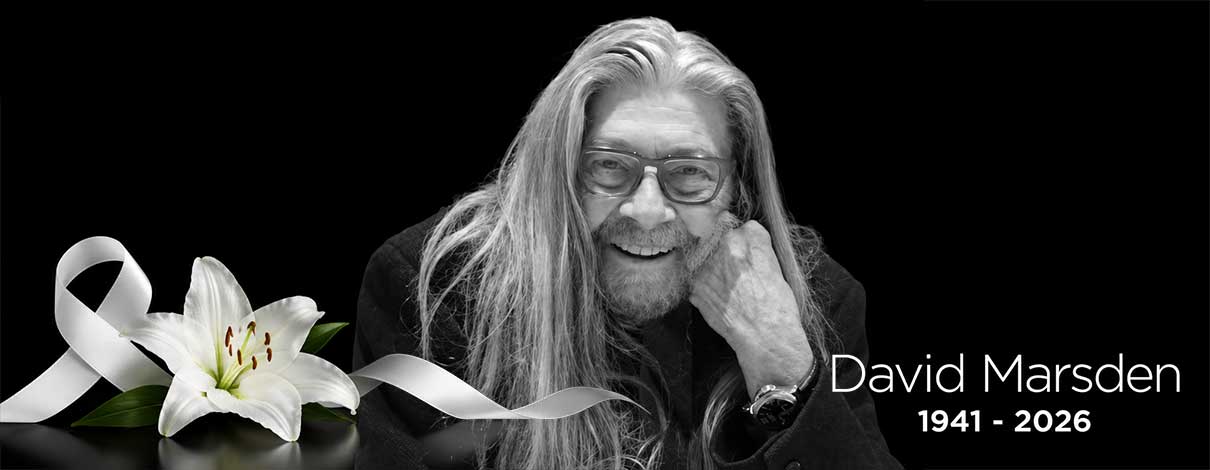
David Marsden, 1941–2026: Remembering the Architect of the Spirit of Radio
The pioneering Canadian broadcaster changed how radio sounded, championed emerging artists and helped make musical discovery central to the CFNY experience.
Canadian broadcasting has lost one of its great musical advocates. David Marsden, the influential broadcaster and programmer most closely associated with CFNY-FM’s legendary “Spirit of Radio” era, died on September 25, 2026. He was 85.
For generations of listeners, Marsden represented something increasingly rare in commercial radio: the belief that the person behind the microphone could still surprise an audience.
He championed new Canadian artists, alternative music and records that did not necessarily fit neatly into established formats. More importantly, he trusted listeners enough to take them somewhere unfamiliar.
His influence extended far beyond a single station. Across more than six decades in broadcasting, Marsden helped demonstrate that radio could be adventurous, personal and commercially relevant without surrendering its curiosity.
A Voice That Changed Canadian Radio
From David Mickie to David Marsden
Born David Michie in Toronto on March 2, 1941, Marsden was raised in Stratford, Ontario. Music entered his life early. As a teenager, he organized sock hops and managed Stratford band The Revols before turning his attention towards broadcasting.
Getting through the door wasn’t immediate. Marsden later recalled approaching numerous stations before landing his first radio position at CFCO-AM in Chatham. A stint at CHLO in St. Thomas followed before Toronto audiences encountered him on CKEY-AM as Dave Mickie.
The Dave Mickie persona was fast, energetic and deliberately unconventional. It attracted enough attention that communications theorist Marshall McLuhan referenced him in Understanding Media. Television followed, including appearances on CBC’s Music Hop and CHCH-TV’s Mickie A Go Go. Global News
By the late 1960s, another transformation was underway.
He moved to Montréal, adopted the name David Marsden, and worked at CKGM-AM before moving to progressive-rock station CHOM-FM. Eventually, he returned to Toronto and the free-form environment of CHUM-FM.
Marsden was moving away from the rapid-fire DJ style of his early career towards something that would ultimately become much more influential: radio built around discovery.
Building CFNY’s Spirit of Radio
Marsden joined Brampton’s CFNY-FM in 1977 and became program director in 1979.
At the time, CFNY was hardly a broadcasting powerhouse. Yet under Marsden’s direction, the station developed into an influential alternative outlet that gave its announcers unusual freedom and its listeners access to music they often couldn’t hear elsewhere.
The philosophy became inseparable from the station’s famous identity: The Spirit of Radio.
CFNY embraced punk, new wave, alternative music and independent Canadian artists alongside records that simply interested its broadcasters. The station became a destination for listeners who wanted discovery rather than repetition.
The approach even entered Canadian music history through Rush. The band’s “The Spirit of Radio,” released on Permanent Waves in 1980, drew inspiration from CFNY, its people and its programming philosophy.
Marsden remained with CFNY through 1988. By then, what had started at a relatively small Brampton station had become part of Canada’s broader musical culture.
Giving New Music Somewhere to Be Heard
Marsden’s importance wasn’t simply that he played unusual records. He created an environment where new music was allowed to compete for listeners’ attention.
That distinction mattered.
Artists outside mainstream radio formats needed broadcasters willing to take risks. CFNY became one of those outlets, particularly for Canadian independent and alternative musicians.
Marsden also helped establish CFNY’s U-Know Awards, initially conceived as an alternative to the JUNOs. They evolved into the CASBY Awards — Canadian Artists Selected By You — and reached a national television audience through CBC in the mid-1980s.
The awards extended the station’s philosophy beyond its playlist. Canadian alternative artists were not simply being played; they were being celebrated as an important part of the country’s musical identity.
A Career That Kept Moving
Leaving CFNY did not end Marsden’s experimentation with radio.
He took the Spirit of Radio concept west to CKST-AM in Vancouver in the early 1990s. Later, after returning to Toronto, he became involved with Iceberg Media, an early Canadian online-radio venture launched in 1999.
That move seems particularly fitting in retrospect.
Long before streaming became the dominant way many people discovered music, Marsden understood that radio’s fundamental idea — one person sharing music with another — didn’t depend upon an FM transmitter.
During the 2000s, he returned to terrestrial broadcasting with The Marsden Theatre on Oshawa’s CKGE-FM, The Rock. The free-form programme continued for more than a decade.
Eventually, Marsden returned to online broadcasting through NYthespirit.com, carrying the philosophy associated with his CFNY years into another generation of radio.
The platform plans to continue broadcasting in his honour.
Recognition for a Broadcasting Original
The Canadian broadcasting industry eventually gave Marsden formal recognition for the influence he had accumulated over decades.
He entered the Canadian Association of Broadcasters Hall of Fame and, in 2011, received the Alan Waters Broadcast Lifetime Achievement Award as he was inducted into the Canadian Music and Broadcast Industry Hall of Fame.
His work also received recognition beyond Canada.
Marsden was one of only two Canadians represented in the “Dear Mr. DJ” exhibit at Cleveland’s Rock & Roll Hall of Fame, according to the official memorial released following his death. He was also Canada’s radio voice for the international broadcast of Live Aid in 1985.
Yet awards tell only part of his story.
For musicians, broadcasters and listeners who experienced CFNY during its formative years, Marsden’s legacy lives somewhere less tangible: in the idea that hearing something unexpected on the radio could change what someone listened to next.
The Lasting Spirit of David Marsden
Marsden spent much of his career pushing against the idea that radio needed to be predictable. That philosophy seems even more significant in an era when algorithms increasingly determine what music listeners encounter.
His approach was different. Someone had to listen first. Someone had to care. Someone had to decide that an artist deserved to be heard — and then take the chance of playing the record.
For Canadian musicians trying to find an audience, broadcasters willing to make those choices mattered.
Marsden once told Broadcast Dialogue that he had no intention of retiring because he loved what he did — particularly music and the people around it. That may be the most fitting way to remember him.
David Marsden did not simply spend his career playing music.
He spent it sharing music he believed people should hear.
In Memoriam
David Marsden (David Mickie)
March 2, 1941 – September 25, 2026
Canadian broadcaster, programmer and champion of new music
Age 85